How to dry washing indoors without causing damp
An airer does not have to mean wet windows. The trick is to dry one load, in one room, with a way for the moisture to leave.
Quick answer
Spin the load well, space items out on an airer in a single closed room, and open a window or the trickle vents so the water can leave the house. Do not dry clothes on radiators or overnight in a bedroom if you can help it: the moisture has to go somewhere, and it will usually land on the glass and walls.
Last updated:
A wet load of washing holds a lot of water, even after a good spin. Dry it in a closed, unventilated room and that water has only one place to go: into the air, then onto the coldest surfaces, which in a UK winter usually means the windows.
You do not need special kit for a safer routine. The aim is simple: get as much water out in the machine as you can, give the clothes some space, and give the moisture a way outdoors.
Who this guide is for: Anyone drying washing indoors in a UK home or flat, especially if windows run wet on laundry day, or if you have no outdoor line and no tumble dryer.
How this was written: This is a short tip page with no product or retailer links and no prices. The advice follows Energy Saving Trust and Shelter England guidance on drying clothes and condensation, and GOV.UK's damp and mould advice.
1. Spin the load well, then shake each item out
A higher spin leaves less water in the fabric, so the airer has less to evaporate. Give each piece a firm shake before you hang it. That opens the fibres, reduces creases and helps the air get to more of the cloth.
If a towel or pair of jeans still feels heavy and cold, it is still very wet. Hang those with plenty of space, or give them a second spin if your machine will do it safely.
2. Use one room, one airer, and some space
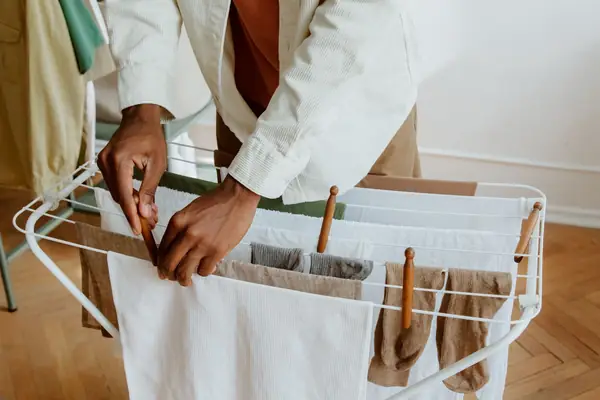
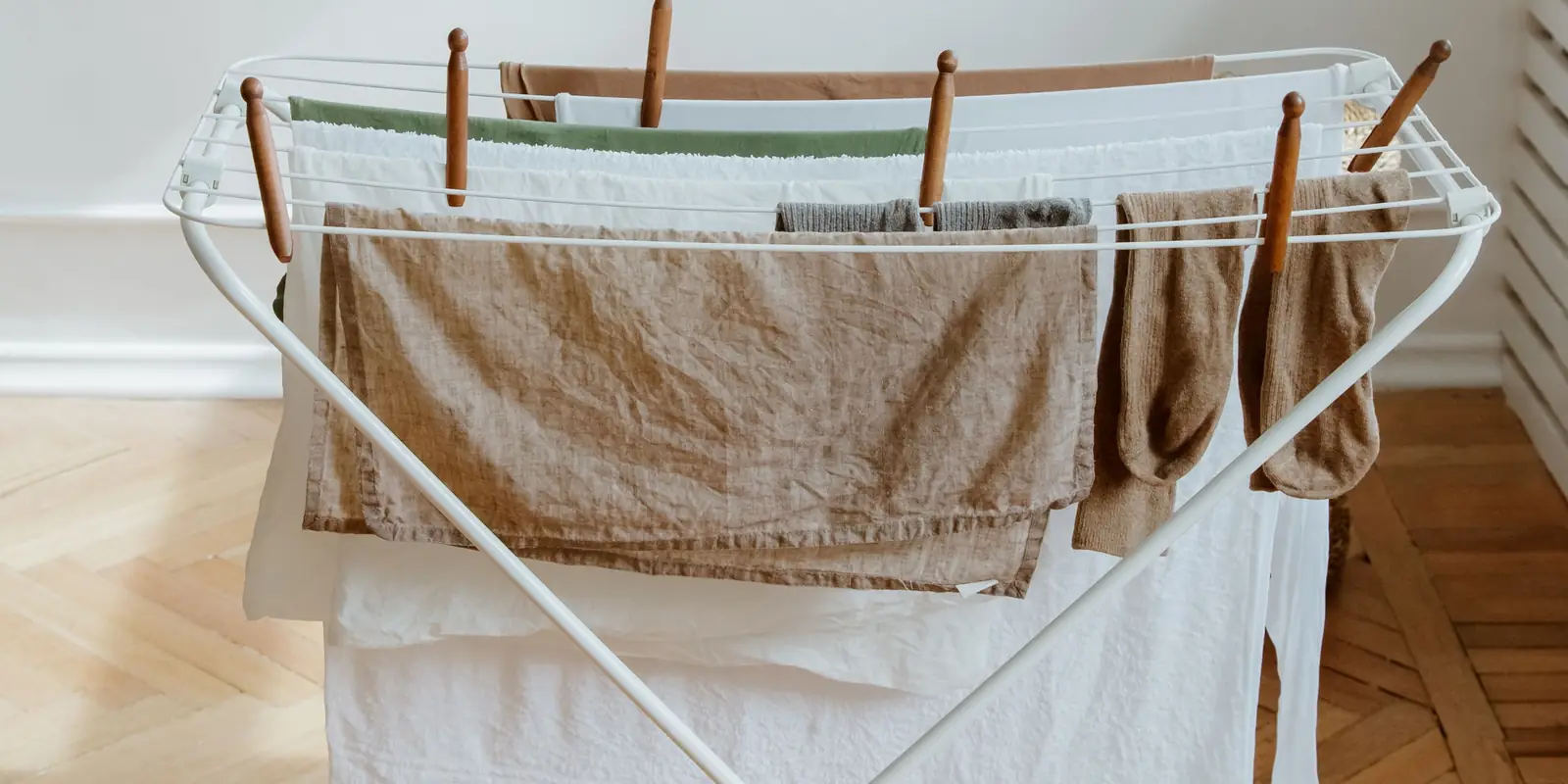
Put everything on a single airer in one room and shut the door, rather than draping clothes over every radiator in the house. Space items so they are not bunched together: two thinner layers with a gap dry faster than one sodden heap, and they release moisture more evenly.
A bathroom with a working extractor, a kitchen with a window, or a spare room you can ventilate all work better than a packed living room or a bedroom you then sleep in.
3. Give the moisture a way out
This is the step most people skip. Open a window, or at least the trickle vents, in the drying room while the load is up. The extractor fan in a bathroom should be on too. You are not trying to heat the street; you are letting wet air leave so it cannot settle on the glass.
If you can only open a window a little, that is still better than a sealed room. A short, regular airing while the clothes are damp does more good than one late blast after they have already steamed the windows.
4. Keep washing off the radiators
Drying on a radiator puts moisture straight into the room and makes the boiler work harder to heat a blocked radiator. It is also a common way to end up with a musty smell on the clothes. Use the airer, and let the radiator do its actual job of heating the room.
The same goes for hanging wet laundry on the back of doors or over a hall banister, where there is little airflow and plenty of nearby paintwork to damage.
5. Do not dry a full load in a bedroom overnight
A closed bedroom already gets moisture from breathing. Add a wet load and the windows, sills and sometimes the wardrobe are wet by morning. If you must dry overnight, pick a room you are not sleeping in, keep the door shut and leave a vent or window slightly open.
Wet windows after a laundry day are a warning sign, not a quirk of the weather. There is a separate tip page on what to do about wet windows in the morning.
6. Take the dry items off promptly
Once things are dry, take them off the airer so the last damp socks are not sitting in a still, humid room for another day. Fold or hang them, and give the room a final airing. Wipe any wet sills so leftover water cannot soak into the frames.
FAQs
Is it safe to dry washing indoors in winter?
Yes, if you ventilate the drying room. The problem is not indoor drying itself; it is trapping all that moisture in a closed, unventilated space. One room, a slightly open window or trickle vents, and no overnight bedroom drying is a sensible winter routine.
How long should I leave the window open?
Leave it open while the clothes are still obviously damp, even if that is only a few centimetres. Once the load is almost dry you can close it and finish with a short airing. You are aiming to let moist air out, not to freeze the house.
Why do my windows stream on washing day?
The load is putting a large amount of water into the air. If the room cannot vent, that water condenses on the cold glass. Space the clothes out, shut other rooms off, and give the moisture a route outside.
Can indoor drying cause mould?
It can, if it happens often in a poorly ventilated room. Repeated wet windows, damp sills and a musty smell are early signs. Improve the drying routine first; if mould is already there, clean it safely and keep using the ventilation steps so it does not come back.
What if I have no outdoor space at all?
You can still dry indoors without soaking the house. The same rules apply: a thorough spin, one ventilated room, space on the airer, and no radiators. A spare bathroom with the extractor running is often the best option in a flat.
If anything on this page looks wrong or out of date, let me know.