How to stop condensation on windows: 12 fixes that work in UK homes
Wet windows every morning are a sign of too much moisture indoors. Here's how to cut it at the source, clear it quickly and stop it turning into black mould, with running costs at the October 2026 price cap.

If you wake up to streaming windows, puddles on the sills and black spots in the corners of the frames, you're not alone. Condensation is the most common damp problem in UK homes, and it peaks from October to March. The good news is that it's usually fixable without building work, and most of the fixes are free or cheap.
Condensation forms when warm, moist indoor air touches a cold surface and cools below its dew point, so the water vapour turns back into liquid. Windows are usually the coldest surface in a room, which is why they get wet first. Every household adds moisture to the air through breathing, cooking, showers, kettles and drying laundry, and modern draught-proofed homes hold onto it. So the fix always comes down to three things: make less moisture, let it out, and keep surfaces warmer. A dehumidifier helps when those aren't enough.
Below are 12 fixes in rough order of cost, from free habits to a dehumidifier, plus specific advice on condensation overnight, condensation on walls and a few handy products that make the daily wipe-down quicker.
Who this guide is for: Homeowners and renters dealing with wet windows, mouldy window frames or damp corners, especially in bedrooms, bathrooms and kitchens. If you have tide marks low on a wall, a damp patch after rain or water coming through the ceiling, that's probably rising damp, penetrating damp or a leak, not condensation. Get it checked rather than relying on the fixes here.
Why your windows get wet (and when it's not condensation)
Air holds more water vapour when it's warm. When that air touches cold glass, it cools, can't hold as much, and the extra vapour turns into droplets. That's why condensation is worst on cold mornings, on single-glazed or older double-glazed windows, and in rooms that are cooler than the rest of the house, such as bedrooms with the door shut and the radiator off.
- Condensation on the inside of the glass means too much moisture indoors and a cold surface. The fixes below help.
- Condensation between the panes of double glazing means the seal has failed. The Energy Saving Trust says you can usually replace the sealed unit rather than the whole window.
- Condensation on the outside is normal. It's a sign your glazing is keeping heat in, and it clears as the day warms up.
If damp appears after rain, has a tide mark low on the wall, or comes with crumbly plaster and salt deposits, it's probably penetrating or rising damp, or a leak. Those need a builder or surveyor, not a dehumidifier.
How to stop condensation on windows overnight
Bedroom windows are the classic problem. Two people breathe out a surprising amount of moisture in eight hours, the door is usually shut, and the heating often goes off at night, so the glass gets cold. Try these, in this order:
- Open the trickle vents at the top of the window frame and leave them open all night, all winter. GOV.UK's ventilation guidance says to keep them open and unblocked, even in winter.
- Leave the bedroom door ajar so moist air can mix with the rest of the house.
- Keep a little background heat. Set the bedroom radiator's valve low rather than off, so the room and glass don't get so cold.
- Don't trap the window behind thick curtains. Curtains tucked behind a radiator or pulled tight against the glass keep it extra cold. Leave a gap at the bottom or use a blind that sits off the glass.
- Don't dry laundry in the bedroom, and don't leave damp towels on the radiator.
- Wipe or vac the windows first thing, then open the window for 10 minutes while you get ready.
If that's not enough, run a dehumidifier on the landing or in the bedroom in the evening. At the October 2026 price cap, a typical 250W compressor model costs about 53p for eight hours. See the running-cost table below.
Fixes 1–4: ventilation (free or almost free)
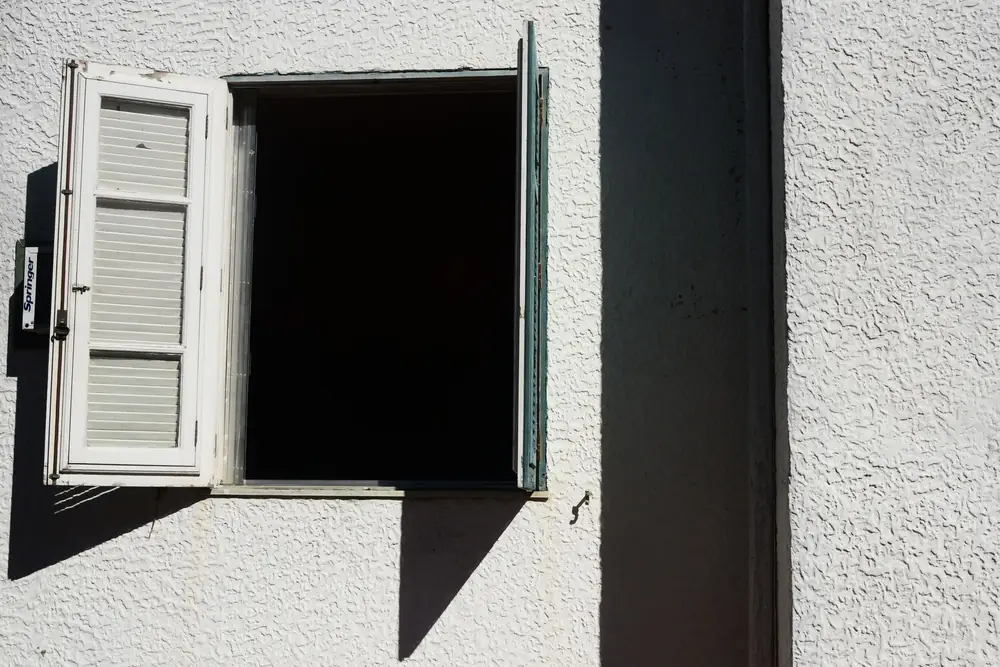
1. Keep trickle vents open. They're the small slotted vents in the top of most modern window frames. They let a steady trickle of fresh air in without a draught. Clear any dust and cobwebs from them.
2. Open windows for a few minutes, a few times a day. The Energy Saving Trust suggests opening windows for at least five minutes several times a day. In winter, a short, wide opening (a “purge”) swaps the air quickly without chilling the walls, which is better than leaving a window on the latch all day.
3. Use extractor fans properly. Run the bathroom fan during every shower and for at least 15 minutes afterwards, and the cooker hood whenever you cook. Close the bathroom and kitchen doors so the steam doesn't spread. If the fan barely holds a sheet of toilet paper, clean the grille or get it checked. A fan on a humidistat or an overrun timer helps.
4. Put lids on pans and close the bathroom door. Boiling pans and showers are two of the biggest single sources of moisture. Lids cut steam and cook faster too. If your pans don't have lids that fit, see our pan sets guide.
Fixes 5–7: heating and insulation
5. Heat steadily, not in bursts. Cold walls and glass are condensation magnets. Keeping rooms at a steady, moderate temperature, rather than letting them go cold and then blasting the heating, keeps surfaces warmer. If you're heating one room only, a thermostat-controlled oil-filled radiator gives gentle, steady heat, and a wall-mounted electric panel radiator on a timer does the same in a room you use every day. Avoid paraffin and portable gas heaters, which put a lot of water vapour into the air.
6. Don't block radiators. Sofas pushed against radiators and long curtains over them stop warm air reaching the window. Radiators work best under windows for exactly this reason.
7. Upgrade the coldest windows when you can. Secondary glazing film, a plug-in secondary glazing panel or replacement double glazing all raise the temperature of the inner pane. If you replace windows, make sure the new ones have trickle vents, because sealing a house up without ventilation makes condensation worse.
Fixes 8–9: drying laundry indoors
8. Dry washing outside or in a tumble dryer when you can. A load of wet washing drying indoors releases litres of water into the air. A vented tumble dryer must vent outside, and a condenser or heat-pump dryer collects the water in a tank.
9. If you must dry indoors, contain it. Dry everything in one small room with the door closed and a window slightly open or a dehumidifier running. Don't drape wet clothes over radiators. A heated clothes airer with a cover dries a load faster than a plain airer and uses far less power than a tumble dryer. Paired with a dehumidifier in the same room, it's the cheapest way to dry laundry indoors without steaming up the windows.
Fixes 10–12: dehumidifiers, moisture traps and the daily wipe
10. Run a dehumidifier. If you've done the free fixes and the windows are still wet, a dehumidifier is the most effective single step. In a normally heated home, a compressor dehumidifier is the most efficient choice. Our dehumidifier guide compares the best models. In cold rooms such as unheated bedrooms, conservatories and garages, a desiccant dehumidifier keeps working when compressor models struggle. See our desiccant dehumidifier guide. Aim for about 50–55% relative humidity.
11. Use moisture traps in small spaces. Non-electric traps such as the UniBond AERO 360 suit wardrobes, cupboards and box rooms. They absorb far less water than an electric dehumidifier, so they're a top-up, not a cure.
12. Wipe or vac the glass every morning. Water left on sills soaks into wooden frames, rots paint and feeds mould on the seals. A window vac makes this a two-minute job, and you can tip the water down the sink. Don't leave wet cloths on the radiator to dry.
How to stop condensation on walls
Condensation on walls usually shows up as damp patches or black mould in corners, behind wardrobes, on ceilings near outside walls and around window reveals. These are the coldest spots, especially on solid outside walls in older homes. The same fixes apply, plus a few extras:
- Leave a gap of a few centimetres behind furniture on outside walls so air can circulate, and don't overfill wardrobes against cold walls.
- Let the bed breathe. Pull the duvet back for a while each morning, keep the bed a little away from cold outside walls and avoid putting a mattress straight on the floor, where moisture gets trapped underneath. If you add a mattress topper, one with a washable cover is easier to keep fresh.
- Treat existing mould properly. GOV.UK's damp and mould guidance says to use a mould and mildew product rather than bleach, wear gloves, goggles and a mask, keep the room's door shut and the window open while you clean, and leave larger areas to professionals. If mould keeps coming back, find the cause.
- Use anti-mould paint only after you've fixed the cause, otherwise it just hides the problem.
- Check insulation. Missing loft insulation shows as mould on bedroom ceilings near the eaves. Cavity wall or internal wall insulation can help cold walls, but get advice first, because poor installation can cause damp.
- If you rent, tell your landlord in writing and keep photos. Landlords must deal with serious damp and mould, and in England social landlords have strict timescales to investigate under Awaab's Law, in force since 27 October 2025.
What a dehumidifier costs to run (October 2026 price cap)
Ofgem's price cap for 1 October to 31 December 2026 sets an average electricity unit rate of 26.32p per kWh for Direct Debit customers in England, Scotland and Wales. Your rate depends on your region and tariff. Here's what typical appliances cost at that rate:
| Appliance | Typical power | Per hour | 8 hours |
|---|---|---|---|
| Small compressor dehumidifier (10–12L) | 150W | about 4p | about 32p |
| Larger compressor dehumidifier (16–20L) | 250W | about 6.6p | about 53p |
| Desiccant dehumidifier (low setting) | 300W | about 7.9p | about 63p |
| Desiccant dehumidifier (high setting) | 650W | about 17p | about 137p |
| Heated clothes airer | 250W | about 6.6p | about 53p |
| Bathroom extractor fan | about 10–30W | under 1p | about 2–6p |
These figures assume the appliance draws full power the whole time. A dehumidifier with a humidistat idles once the room reaches your target, so real costs are often lower. Check the wattage on the listing for the model you're considering. Running a dehumidifier for a few hours in the evening, or while laundry dries, is usually enough to keep windows clear.
Which fix for which problem?
| What you see | Likely cause | Try first |
|---|---|---|
| Bedroom windows wet every morning | Breath moisture, closed door, cold room | Trickle vents open, door ajar, low background heat |
| Kitchen windows steam up when cooking | Pans and kettle | Lids on, cooker hood on, kitchen door shut |
| Bathroom mould on ceiling and seals | Showers, weak extractor fan | Fan on for 15 minutes after, clean the fan, mould spray |
| Whole house damp when washing is drying | Laundry drying indoors | One closed room plus a dehumidifier or heated airer |
| Cold box room or conservatory always damp | Cold surfaces, little heating | Desiccant dehumidifier, steady low heat |
| Water between the double-glazed panes | Failed sealed unit | Replace the glass unit |
| Tide mark low on a wall, or damp after rain | Rising or penetrating damp, or a leak | Get a builder or surveyor to check |
Handy products for condensation
How we chose: We based the advice on guidance from the Energy Saving Trust and GOV.UK, and used Ofgem's price cap rate for running costs. For the products, we shortlisted popular, well-reviewed window vacs, moisture traps, hygrometers and mould removers on Amazon.co.uk, checked specs on the listings and looked for recurring themes in owner feedback. We have not personally tested these products; this is a research-based roundup. Our research process.
Handy products compared
| Pick | Type | What it does | Power | Good for | Amazon |
|---|---|---|---|---|---|
| Kärcher WV 2 PlusBest window vac | Cordless window vacuum | Sucks water off glass into a tank | Rechargeable; up to 35 min (Kärcher's figure) | Daily condensation, shower screens, mirrors | Check price |
| Beldray Window VacBudget window vac | Cordless window vacuum | Sucks water off glass into a tank | Rechargeable; up to 30 min (Beldray's figure) | Flats, bedrooms, a few windows | Check price |
| UniBond AERO 360Best moisture trap | Non-electric moisture absorber | Crystals soak up moisture into a tray | None | Rooms up to 20m², wardrobes, under-stairs | Check price |
| TempPro (ThermoPro) TP50Best for knowing your humidity | Digital hygrometer | Shows humidity and temperature | 1 × AAA battery (included) | Bedrooms, nurseries, checking a dehumidifier works | Check price |
| HG Mould Remover SprayBest mould remover | Mould and mildew spray | Removes black mould stains | None | Window seals, sills, tiles, silicone | Check price |
Specs are from manufacturer listings as of 20 October 2026; claimed figures (running costs, runtimes) are the maker’s, not ours. Check the Amazon page for the current price and exact variant before you buy.
Kärcher WV 2 Plus Cordless Window Vac, 35 min run time
Best for: Clearing condensation from several windows every morning in a few minutes
- Type
- Cordless window vacuum
- What it does
- Sucks water off glass into a tank
- Power
- Rechargeable; up to 35 min (Kärcher's figure)
- Good for
- Daily condensation, shower screens, mirrors
Kärcher invented the window vac, and the WV 2 Plus is one of the best-selling versions on Amazon UK. You run the 280mm squeegee nozzle down the glass and it sucks the water into a small tank instead of leaving it to run onto the sill. Kärcher quotes 35 minutes per charge, which is plenty for a whole house of windows, and there's an LED battery indicator. The Plus kit adds a spray bottle with a microfibre pad and a small bottle of glass cleaner concentrate for proper window cleaning. It's sold by Amazon.
Owners say it clears condensation from windows and shower screens quickly and is worth the money. Some get streaks, especially on dirty glass, and there are a few reports of units failing within weeks, so keep your receipt. A window vac doesn't stop condensation. It just stops the water soaking into frames and sills, which is where mould starts. If you have lots of windows or large patio doors, Kärcher's WV 6 Plus has a longer run time.
What owners and reviewers like
- Clears a window in seconds
- Stops water pooling on sills and frames
- Long run time for a whole house
- Sold by Amazon
Watch-outs
- Treats the symptom, not the cause
- Some streaking reports
- A few early-failure reports
Check current price on Amazon Affiliate link · opens Amazon.co.uk
Beldray Cordless Window Vac (BEL0749), 30 minutes per charge
Best for: A cheap way to clear condensation from a few windows
- Type
- Cordless window vacuum
- What it does
- Sucks water off glass into a tank
- Power
- Rechargeable; up to 30 min (Beldray's figure)
- Good for
- Flats, bedrooms, a few windows
Beldray is a long-running UK homeware brand, and this window vac costs much less than a Kärcher. It has a squeegee head, a 60ml water tank and up to 30 minutes of use per charge, according to Beldray. It's light at around 900g, so it's easy to use on high windows. Beldray suggests washing the glass first with your usual cleaner, then using the vac to dry it. It's sold by homeofbrands, a third-party seller.
Owners say it's quick and easy for clearing condensation, with one saying it clears all their windows in about five minutes. Reliability is the weak point: some units stopped charging within a few months, and some leak or drip if you tilt them too far. It's fine for a flat or a couple of bedrooms. If you'll use it daily all winter, the Kärcher is the safer buy.
What owners and reviewers like
- Much cheaper than branded rivals
- Light and easy to handle
- Does the morning wipe-down fast
Watch-outs
- Mixed reliability reports
- Small tank; drips if tilted
- Third-party seller
Check current price on Amazon Affiliate link · opens Amazon.co.uk
UniBond AERO 360° Moisture Absorber, device with 1 refill tab (450g)
Best for: Small rooms, wardrobes and cupboards where a dehumidifier is overkill
- Type
- Non-electric moisture absorber
- What it does
- Crystals soak up moisture into a tray
- Power
- None
- Good for
- Rooms up to 20m², wardrobes, under-stairs
Moisture traps like the UniBond AERO 360 use crystals that draw water out of the air and drip it into a tray. They need no electricity, make no noise and are cheap to start. UniBond says it suits rooms up to 20m² and that a refill tab lasts up to three months, depending on how damp the room is. The device has a level indicator and is made from 60% recycled plastic. It's sold by Amazon, and the 4-pack of neutral refills is one of the best-selling home products on Amazon UK.
Owners say it helps keep windows drier in the morning in small rooms and kitchens and stops musty smells in wardrobes. Others found it collected very little, especially in steamy bathrooms, and some say a tab only lasts a few weeks in a damp room. Be realistic: a trap absorbs a small amount of water compared with an electric dehumidifier, so it's a top-up for a small space, not a fix for a damp house.
What owners and reviewers like
- No power, no noise
- Cheap to start
- Good for wardrobes and small rooms
- Sold by Amazon
Watch-outs
- Absorbs far less than an electric dehumidifier
- Refills are an ongoing cost
- Mixed results in bathrooms
Check current price on Amazon Affiliate link · opens Amazon.co.uk
TempPro (formerly ThermoPro) TP50 Digital Thermo-Hygrometer
Best for: Checking whether a room is actually too humid before you spend money
- Type
- Digital hygrometer
- What it does
- Shows humidity and temperature
- Power
- 1 × AAA battery (included)
- Good for
- Bedrooms, nurseries, checking a dehumidifier works
A hygrometer is the cheapest way to find out whether you have a humidity problem and whether your fixes are working. The TP50 shows the temperature and relative humidity, updates every 10 seconds, records highs and lows, and has a simple face that shows dry, comfortable or wet. It stands on a shelf or sticks to a fridge with its magnet. ThermoPro has rebranded as TempPro, so you may get either name on the box. It's sold by the brand's UK store.
Owners say it's accurate, easy to read and good value, and the battery lasts a long time. A few units failed within a couple of months. As a rough guide, if a room sits above about 60–65% for long periods in winter, condensation and mould are likely. If you buy a dehumidifier, set it to around 50–55%.
What owners and reviewers like
- Cheap way to measure the problem
- Clear display with min/max
- Shelf or magnet mounting
- Battery included
Watch-outs
- Occasional early failures
- No app or alerts on this model
Check current price on Amazon Affiliate link · opens Amazon.co.uk
HG Mould Remover Spray, 500ml
Best for: Cleaning black mould off window seals, frames, grout and painted walls
- Type
- Mould and mildew spray
- What it does
- Removes black mould stains
- Power
- None
- Good for
- Window seals, sills, tiles, silicone
Once condensation has been sitting on frames and sills for a while, black mould usually follows. HG's mould spray is one of the best-selling mould removers on Amazon UK. HG says it removes mould and mildew from plastered walls, tiles, grout, silicone seals and windows, and that it has a bleaching effect, so test it somewhere hidden first. It's sold by Amazon.
Owners say it works fast with little or no scrubbing. The smell is strong, so open a window, wear gloves and keep it away from fabrics, and don't mix it with other cleaning products. Some found the trigger stopped working after a few uses. Remember that a mould spray only cleans what's there. The mould will come back unless you deal with the condensation.
What owners and reviewers like
- Fast on black mould with little scrubbing
- Works on seals, grout and walls
- Cheap and sold by Amazon
Watch-outs
- Strong smell; ventilate well
- Bleaching effect: test first
- Some trigger failures
Check current price on Amazon Affiliate link · opens Amazon.co.uk
FAQs
How do I stop condensation on my windows overnight?
Keep trickle vents open, leave the bedroom door ajar, keep a little background heat in the room, don't trap the window behind curtains and don't dry laundry in the bedroom. If the windows are still wet, run a dehumidifier in the evening and wipe the glass each morning.
Should I open my windows in winter to stop condensation?
Yes, briefly. The Energy Saving Trust suggests opening windows for at least five minutes several times a day. A short, wide opening swaps damp air for drier outdoor air without chilling the walls as much as leaving a window on the latch all day.
Does a dehumidifier stop condensation on windows?
It usually makes a big difference, because it lowers the humidity indoors. Aim for about 50–55%. It works best alongside ventilation and steady heating, and it won't fix a failed double-glazing seal, a leak or rising damp. See our dehumidifier guide for the best models.
How much does it cost to run a dehumidifier overnight?
At Ofgem's October–December 2026 cap of 26.32p per kWh, a 250W compressor dehumidifier costs about 6.6p an hour, or about 53p for eight hours at full power. A model with a humidistat often costs less because it idles once the room is dry enough.
Why do I get condensation on my walls?
The coldest parts of a room, such as corners, outside walls, ceilings near the eaves and behind furniture, are where moisture condenses first. Improve ventilation, keep rooms evenly heated, leave gaps behind furniture and check insulation. If the damp has a tide mark or appears after rain, it may not be condensation.
Do moisture traps and bowls of salt or rice work?
Proper moisture traps with absorbent crystals do collect some water, which helps in wardrobes and small rooms. Bowls of salt or rice absorb very little. Neither comes close to an electric dehumidifier for a damp room.
Is condensation on the outside of my windows a problem?
No. The Energy Saving Trust says outside condensation is a sign your windows are keeping heat in. It clears as the day warms up and won't cause damp indoors.
Do you get commission?
Yes. If you buy through our links, Amazon may pay us a small commission at no extra cost to you. It doesn't affect which products we include. See our Affiliate Disclosure.
Sources we consulted
- Energy Saving Trust: how to get rid of damp
- Energy Saving Trust: how to improve your home's ventilation
- GOV.UK: existing home ventilation guide
- GOV.UK: understanding and addressing the health risks of damp and mould in the home
- Ofgem: energy price cap unit rates, 1 October to 31 December 2026
Prices change constantly, so we don’t list them here. Always check the current price, seller and delivery details on Amazon before buying. If anything on this page looks wrong or out of date, tell us.